


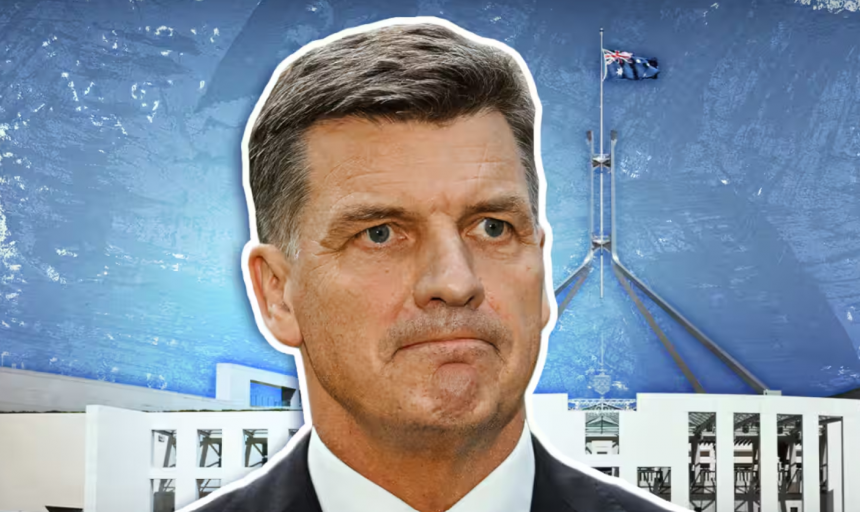
Angus Taylor’s political career combines economics, regional Australia, energy policy, business experience, and an increasingly prominent role within the Liberal Party. Since entering the Australian Parliament in 2013 as the Member for Hume, Taylor has progressed through government ministries, senior opposition portfolios, and ultimately the leadership of the federal Liberal Party. In February 2026, he became Leader of the Opposition, placing him at the centre of the national political contest over Australia’s economic direction, energy policy, immigration, living standards, taxation, regulation, and the future identity of the Coalition.
Taylor was born in Cooma, New South Wales, and grew up with close connections to regional Australia. His family background and experience in rural communities became important elements of his political identity. Regional constituencies often experience national economic policy differently from major metropolitan centres. Agriculture, energy, transport infrastructure, telecommunications, water, access to services, and the viability of small businesses can have particularly direct consequences for rural communities. Taylor has repeatedly emphasized these issues while representing Hume.
His academic background also played an important role in shaping his professional path. Taylor studied economics and law at the University of Sydney and later received a Rhodes Scholarship to study at Oxford. Before entering Parliament, he worked as a management consultant and advised organizations in areas including energy, resources, agriculture, and infrastructure. This combination of economics and commercial consulting would later become particularly relevant to his political focus on productivity, investment, energy costs, and business conditions.
When Taylor entered federal Parliament in 2013, Australia was already engaged in major debates about energy and climate policy. Few policy areas have generated such persistent disagreement because they involve several objectives that can conflict with one another. Electricity must remain reliable and affordable while emissions are reduced. Industries require internationally competitive energy prices. Renewable generation needs transmission and storage infrastructure. Traditional energy industries employ significant numbers of people and support regional economies. Governments therefore face pressure from environmental groups, consumers, industry, investors, and communities simultaneously.
Taylor eventually became closely associated with energy policy during his time in government. His approach generally emphasized affordability and reliability alongside emissions objectives, reflecting a broader Coalition argument that climate policy should not undermine household budgets or industrial competitiveness. Critics of Coalition energy policy argued that Australia needed faster transitions and greater certainty for renewable investment, while supporters warned that poorly managed transitions could increase costs and threaten reliability. These disagreements became part of a much larger global debate about how advanced economies should decarbonize without producing economic disruption.
Economics became even more central to Taylor’s public profile after the Coalition moved into opposition. He served as Shadow Treasurer following the 2022 election, making him one of the principal Liberal voices responding to the Albanese government’s economic agenda. Opposition treasury spokespeople occupy a difficult position because they must criticize government decisions while simultaneously presenting themselves as credible alternatives. They need to discuss inflation, taxation, public spending, productivity, wages, housing, interest rates, investment, and government debt in language understandable to voters who may not follow economic policy closely.
Cost-of-living pressures gave these debates additional political importance. Inflation affects households directly because people encounter it every time they buy groceries, pay electricity bills, renew insurance, rent a home, or make mortgage payments. Governments do not control every factor contributing to inflation, but voters inevitably judge them according to their economic experiences. Opposition parties therefore attempt to connect broad economic indicators with everyday household pressures, arguing that alternative tax, spending, regulatory, or energy policies would produce better outcomes.
More EV News

Taylor’s leadership ambitions eventually moved beyond the treasury portfolio. In February 2026, he was elected leader of the federal parliamentary Liberal Party and became Leader of the Opposition. The change followed a leadership contest against Sussan Ley and placed Taylor in the position of attempting to rebuild the Coalition as a competitive alternative government.
Leadership creates a very different challenge from managing an individual portfolio. A shadow treasurer can concentrate primarily on economics. An opposition leader must develop positions across defence, foreign affairs, healthcare, education, immigration, housing, climate, infrastructure, social policy, and national security. The leader must also manage internal party differences while communicating a coherent public message. Political parties are coalitions of people with different ideological priorities, and the Liberal Party contains both more conservative and more moderate traditions.
Taylor’s leadership therefore involves questions about the broader direction of Australia’s centre-right. The Coalition must compete simultaneously for suburban families, regional voters, small-business owners, professionals, older Australians, younger voters concerned about housing, and electorates where independent candidates have successfully challenged traditional Liberal representation. Policies that appeal strongly to one group can create difficulties with another. This electoral balancing act is one of the defining strategic problems facing modern Australian conservatism.
His economic background remains central to the political identity he has brought to the leadership. Taylor frequently emphasizes living standards, small business, lower taxes, productivity, and what he presents as excessive government intervention. His opponents challenge these positions from different directions, arguing over questions such as the appropriate level of public spending, climate policy, workplace regulation, and social services. These are not merely technical economic disagreements. They reflect different philosophies about the role government should play in shaping markets and protecting citizens from economic risk.
Energy remains particularly important because Australia possesses enormous natural resources while also having significant renewable potential. The country exports fossil fuels, contains critical minerals required for clean technologies, and has some of the world’s strongest solar and wind resources. How Australia manages these advantages will influence electricity prices, regional employment, industrial development, emissions, and export relationships for decades. Taylor’s earlier involvement in energy policy means his record and positions in this field are likely to remain closely scrutinized as opposition leader.
Another challenge is the changing media environment. Political leaders once relied heavily on newspapers, television, and radio to communicate with voters. Today, every statement can be clipped into short videos, redistributed without context, turned into memes, or challenged immediately by opponents. Leaders therefore need to communicate simultaneously through traditional interviews and digital platforms. A successful parliamentary performance may energize political insiders while having little impact on voters who primarily encounter politics through short-form content.
Taylor’s rise also demonstrates how quickly political careers can change. A politician can move from a specialist portfolio into national leadership within a relatively short period when party circumstances shift. Once that happens, previous speeches, ministerial decisions, business experience, and policy positions receive renewed scrutiny because voters are no longer evaluating a minister or spokesperson—they are evaluating a potential prime minister.
As of 2026, Angus Taylor’s political story remains unfinished. His leadership of the opposition represents the most consequential stage of his career so far, but its long-term significance will depend on his ability to unite his party, develop a persuasive policy agenda, respond to changing economic conditions, and convince Australians that the Coalition offers a credible alternative government.
His career nevertheless already provides an interesting case study of the relationship between professional expertise and political leadership. Economics and consulting gave Taylor one framework for understanding policy, while parliamentary politics requires a much broader combination of communication, compromise, strategy, and public trust. The transition from economist and consultant to minister, shadow treasurer, and opposition leader demonstrates how those worlds can intersect—and how different the demands become once someone moves from analyzing problems to attempting to lead a country’s political response to them.